Cult movies. What does it take for a film to be considered 'cult'? Well, if the Hollywood hyperbole machine is to be believed, all a film has to be to be 'cult' is old and forgotten about. If it's old and remembered, it's 'classic'.
The upcoming Fright Night is here referred-to as a remake of a 'cult'. It isn't. The 1985 version was a perfectly fine film, with a lovely performance by Roddy McDowall in the role David Tennant has now taken up. But, for whatever reason, it didn't ignite the fans.
As is often the way with advertising, over-use has rendered these words almost meaningless.
But, to be a cult film, requires more than just age ... It requires credentials that only the fans can provide. In this way, Lost Boys (1987) is probably more of a cult than Fright Night. The more dedicated the fans, the more obscure the film, the more likely it is to be a genuine cult.
The motley crew of the good ship Serenity, here seen in the film of the same name ... Produced in no small part thanks to fan pressure.
Doctor Who fans are ridiculously dedicated, but their show has been consistently popular (much to the BBC's chagrin back in the 1980s) so that isn't a cult, that's a franchise. But Firefly, that died after just one year and now, a decade later, groups of 'Browncoats' are starting to make their presence felt with conventions and websites.
Such as this upcoming event organised by the California Browncoats.
Fans are the key to identifying and understanding a genuine cult. Fans who become so passionate about a show or a film, they interact with it, they don't just consume it, they study it, write about it, and pastiche it.
In the interests of decency, Bowie's tights and lunch-box are out of shot.
The Jim Henson film Labyrinth (1986) has developed quite a healthy cult following ... which extends to a range of fan-written fantasy stories (both the sexual - or Slash - variety and more romantic) which you can sample here.
Quentin Tarantino is a fan of cult films and layers his films with dense, inter-connected references to them. Kill Bill (2003) is heaving with images and ideas lifted directly from Japanese and Italian films. I defy anyone but the most hard-core of cult movie fans to identify them all. But Kill Bill itself is not a cult film. It's too popular, too mainstream.
Rocky Horror Picture Show (1975), of course, is a cult film and has been so for so long that it has emerged from the other side of cult and become mainstream.
Great poster, shame about the strap-line.
I would argue that the original Tron (1982) was a cult movie, spawning costumes as SF cons and fan-made computer games - like this one, which is wonderfully diverting - until this year, when the sequel brought it to the forefront of everyone's attention.
Stuart Gordon's Reanimator (still the best adaptation of an H.P. Lovecraft story yet to hit cinema screens) was a reasonable hit at the time - 1985 - but has largely been forgotten since. A whole new generation of fans have clearly discovered it (as an adjunct to the present, unfortunate, fashion for all things zombie) and have been inspired by it. Take this surprisingly assured fan-film, for example.
Another ingredient that can give a film cult status is its treatment by its distributors. Fritz Lang's Metropolis (1927) was slashed down to almost half its length after its premiere and it has taken film historians thirty-odd years to re-assemble the original movie from prints found all over the world. The BD and DVD released last Christmas still isn't complete, but it's as good as we're ever likely to get. Orson Welles' Touch of Evil (1958) was similarly brutalised by its studio and, at least in America, so was Terry Gilliam's master-work, Brazil (1985). These are all cult films.
A slice here, a cut there, and we'll have a film with the new happier ending ...
The other key to cult success is that a film or TV show needs to have been a flop upon initial release. Clearly, this doesn't guarantee a long and varied shelf life, but being buried and forgotten about save by those with an affection for the unloved underdog, seems to be one of the most common signifiers of a cult.
I imagine Scott Pilgrim vs. The World (2010) will develop cult status eventually. And that, then, would be the final ingredient - the 'eventually'. You can't rush a cult. Famously, The Shawshank Redemption (1994) died on its arse at the cinema but, over a five year period, developed a passionate fan-base on home video. That, therefore, went through a phase when it was a cult film, but has now become so ubiquitous it is entirely mainstream.
Importantly, you can't manufacture a cult, either. Fans will decide what they like. They don't appreciate marketing people telling them what to think.
Now, all this was inspired by this lovely little documentary, which investigates what it is to be 'cult' and gives some esoteric examples. Tis just a shame that this piece is only ten minutes long, I'd love to have seen more ...
Now, in case you are remotely interested - my vote for best cult film would be Mike Jittlov's The Wizard of Speed and Time (1988). Never heard of it? Well, there you go, the first stage of cult-dom already achieved.
It started life as this short film in 1979, which I offer by way of whetting your appetite:
Part one of this ginormous list - The Silents - is here. And now, part two ...
THE THIRTIES:
39) All Quiet on the Western Front (1930)
During the transition from silence to sound, the ambition of film-makers shrank. Large scale epic movies pretty much disappeared, replaced by films about people standing still in small rooms – so the primitive microphones could pick up the dialogue. This part-silent, part-sound masterpiece was the last large-scale Hollywood movie for a while.
40) Laurel and Hardy Murder Case (1930)
41) Another Fine Mess (1930)
A point of order: I’ve included a representative sample of Laurel and Hardy films in this list but, the reality is, every Laurel and Hardy film is essential viewing.
Every single Laurel and Hardy film is worth watching, just don't tell anyone, alright ...
42) Little Caesar (1930)
The film that made a star of Edward G, see. It also set the template for every gangster film made since, see. It definitely wasn’t the end of Rico!
43) Dracula (1931)
Here is a short piece about the two different versions of Dracula ... I apologise about the TV presenter but, y'know, what can you do ...
44) Frankenstein (1931)
You can do quite a lot with people standing around in small rooms. Frankenstein is clearly the better of these two films. The Dracula to watch is actually the George Melford version, shot at the same time as the more-famous but less interesting Tod Browning version.
One of the most famous, and oft-parodied sequences in all American cinema ...
45) City Lights (1931)
Of course, when you’re the most famous film-maker on the planet, you don’t have to bow to fashion. Chaplin didn’t want to make films in sound, so Chaplin didn’t.
46) Public Enemy (1931)
47) M (1931)
The influence of German Expressionism still has the power to astonish. M is every bit as remarkable and just as influential a piece of work as Fritz Lang’s other masterpiece – Metropolis. You can watch it all here:
48) Vampyr (1932)
The last silent film on the list, although it does have short scenes of dialogue. Film distributors were, for the first time, encountering problems with the language barrier. Where a silent film could play in every country in the world, a sound film needed re-shooting or the new technology of re-dubbing. Either was expensive so, one way around the problem, was to keep the amount of dialogue to a minimum.
49) I Am a Fugitive from a Chain Gang (1932)
50) Scarface (1932)
A good year for Paul Muni ... Two massive hits in one year and then, frankly, nothing much for the rest of his career.
51) Shanghai Express (1932)
52) Freaks (1932)
Browning’s fame rests on his 1931 Dracula, but it should rest on this film which, along with a lot of movies in these pre-Code, early sound days, has imagery so disturbing it lived in the memory of cineastes for the thirty years the movie was banned in Britain.
This film was decades ahead of its time. Cold comfort to Browning, of course, since it effectively ended his career. If David Lynch’s grotesques of the subconscious come from anywhere, it’s right here:
53) Music Box (1932)
So, this is what you have to go through to win a blessed Oscar ...
As with all of the films listed, watching them on a computer via YouTube screen is far from the ideal way to watch a movie, so go out and buy this one, okay ...
54) 42nd Street (1933)
55) Gold Diggers of 1933 (d'uh)
56) Duck Soup (1933)
Like Laurel and Hardy, there really is no such thing as a bad Marx Brothers film ...
57) Queen Christina (1933)
58) King Kong (1933)
Better than Jackson's remake (which is great, of course, but still ... ) and arguably better than any monster movie made since, this film is responsible for so many film-maker's passion, not least Ray Harryhausen.
59) Sons of the Desert (1933)
60) Invisible Man
Claude Rains wondering if his bum looks invisible in that ...
And this is what a fan-made trailer looks like:
61) Triumph of the Will (1934)
Riefenstahl was one of the finest visual artists ever to work in cinema and yet she and her work is widely reviled ... Can't think why ...
62) L'Atalante (1934)
63) Black Cat (1934)
64) Them Thar Hills (1934)
Both this film and its sequel Tit For Tat were nominated for Oscars.
65) It Happened One Night (1934)
The film that ruined the male underwear industry ... Because: If wearing a vest wasn't good enough for Clark Gable, it wasn't good enough for anyone else .
66) Man Who Knew Too Much (1934)
67) Thin Man (1934)
68) Captain Blood (1935)
69) Tit For Tat (1935)
The direct sequel to Them Thar Hills – and the only sequel the pair made – this film features another grudge-match between the boys and Brit co-star Charlie Hall, who appeared in some fifty of their films, but here is playing the same character and therefore remembers them from their previous encounter. Imagine what Jimmy Finlayson’s life would have been like if he could remember every time they ruined his day!
70) Mutiny on the Bounty (1935)
71) A Night at the Opera (1935)
One of many classic routines from the film:
72) 39 Steps (1935)
73) Bride of Frankenstein (1935)
One of those all-too-rare sequels that's better than the original.
74) Top Hat (1935)
75) Modern Times (1936)
76) Bohemian Girl (1936)
77) Swing Time (1936)
78) San Francisco (1936)
The first disaster movie, as such, and one of the first films to rely heavily on special effects.
Rather like Cameron's Titanic, you spend the movie twiddling your thumbs waiting for this ...
79) Mr. Deeds Goes to Town (1936)
80) Sabotage (1936)
81) Secret Agent (1936)
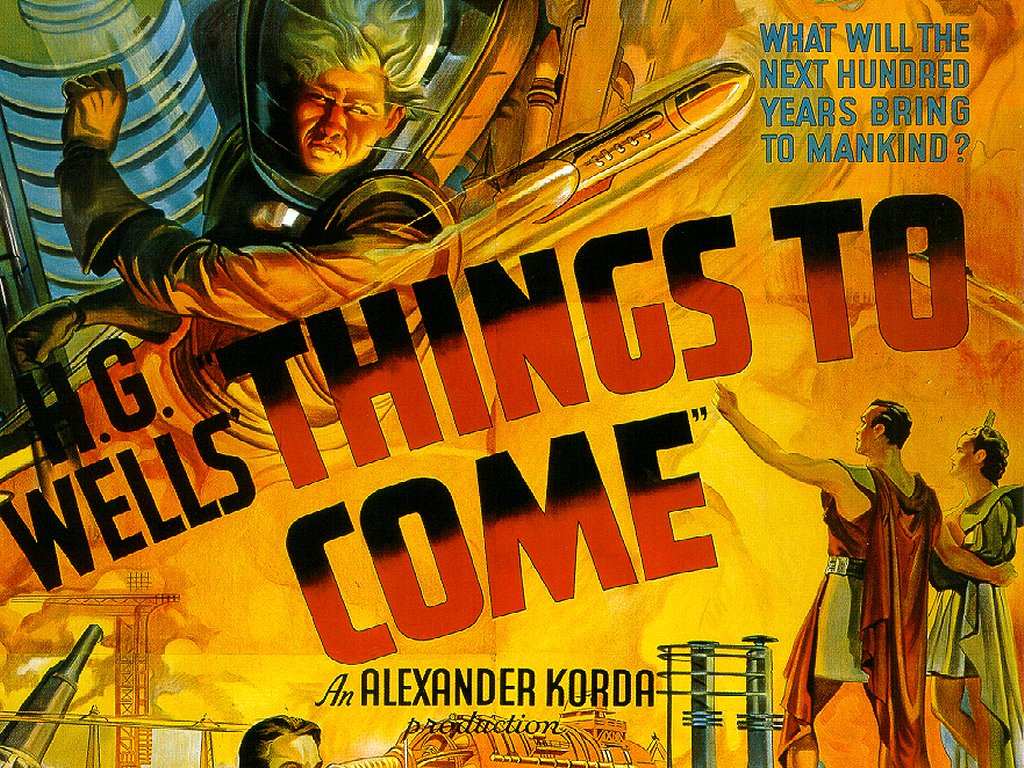
82) Things to Come (1936)
Wells was scathing in his review of Metropolis, ten years before, and felt the need to present his own vision of the future ... Professional jealousy, or what?
83) Captains Courageous (1937)
84) Lost Horizon (1937)
85) Way Out West (1937)
All together now ... On a mountain in Virginia, stands a lonesome pine ...
86) Snow White and the Seven Dwarfs (1937)
87) Jezebel (1938)
88) Adventures of Robin Hood (1938)
Best sword-fight in any film. Ever.
89) Angels with Dirty Faces (1938)
Of course, what Cagney really wanted to do was sing ...
90) Olympia (1938)
91) Bringing Up Baby (1938)
92) Lady Vanishes (1938)
1939 was the year when the world turned. For some reason, as politics collapsed into disaster and millions of lives changed forever … Hollywood turned-out an unprecedented array of extraordinary films …
93) Mr. Smith Goes to Washington (1939)
Capra's inspirational fantasy about America's political machine - which essentially made James Stewart's career.
94) Stagecoach (1939)
95) Wizard of Oz (1939)
Lions and tigers and ... Oh no, no tigers; monkeys though ... Flying monkeys!
96) Goodbye Mr Chips (1939)
97) Hunchback of Notre dame (1939)
98) Gone With the Wind (1939)
One of the most famous movie posters ever created - although it is a re-issue poster from when the film was already a resounding success.
And, in case you don't know what the most-seen movie ever made looks like ...
99) Ninotchka (1939)
Yes, Garbo laughing was a big deal ... It was about as likely then as Von Trier making a comedy or Adam Sandler ... making a comedy.
100) Roaring Twenties (1939)
The two giants of the gangster genre ... This movie was Pacino meets De Niro in Heat, only bigger.
See, some people think that David Lynch is strange, even eccentric. But, the truth is, he's just a man who enjoys a cup of coffee and a little Barbie bondage ... What could be more natural?
Funny, but Clint Howard never gets roles like this in his brother Ron's films ...
One good way of keeping the cost of movie production down is to re-use the expensive bits - the props, the sets and, if possible, the actors.
Famously, back in 1931, two different versions of Dracula were shot on the same sets: The legendary Bela Lugosi version and the rarely-seen but actually better Spanish version starring the (not terribly charismatic) Carlos Villarías and directed by George Melford, who shot his version at night, while Tod Browning et al worked during the day.
This was not unusual in the early days of sound. Similarly, during the 'golden' age of The Studio System, the studios had a range of sets that were constantly dressed and re-dressed, decorated and re-decorated as needed or, as Christian Hayes points out in his blog The Classic Film Show, they sometimes didn't bother.
Two of the photos below are from the Humphrey Bogart film All Through The Night (1941), the other two photos are from a little thing called The Maltese Falcon (1941), also starring Humphrey Bogart and produced a few months later - before, it seems, the set dressers had chance to do much other than re-arrange the furniture.
All Through The Night's elevator
... or is it The Maltese Falcon's elevator?
All Through The Night's corridor
... sorry, no, it's The Maltese Falcon's corridor!
Thing is, these sets were permenant fixtures on the studios' backlots, specifically designed to be used over and over again. Now the studios no longer exist as production houses and sets are routinely ripped-down as soon as a film is finished, this doesn't seem to happen any more.
You'd think, especially in these straightened times, there would be a good case to make for this economy. Two films for the price of one and a bit. You buy one, you get one (almost) free.
This being so, imagine my delight when I discovered firstly this, the trailer for Uwe Boll's latest iteration of his videogame turned movie franchise: Bloodrayne - The Third Reich, featuring Clint Howard and Michael Paré:
Closely followed by the deliciously politically-incorrect comedy horror that actually looks much more interesting - Blubberella, also featuring Clint Howard and Michael Paré:
There you go, two schlock exploitation films for the price of one. Great return on investment! Now we just need to persuade James Cameron to film a smurf movie at the same time as Avatar 2.
You remember Stanley Kubrick. He started life as a photographer and, throughout his life, if he had to be photographed, he preferred to photographed with a camera. Or playing chess.
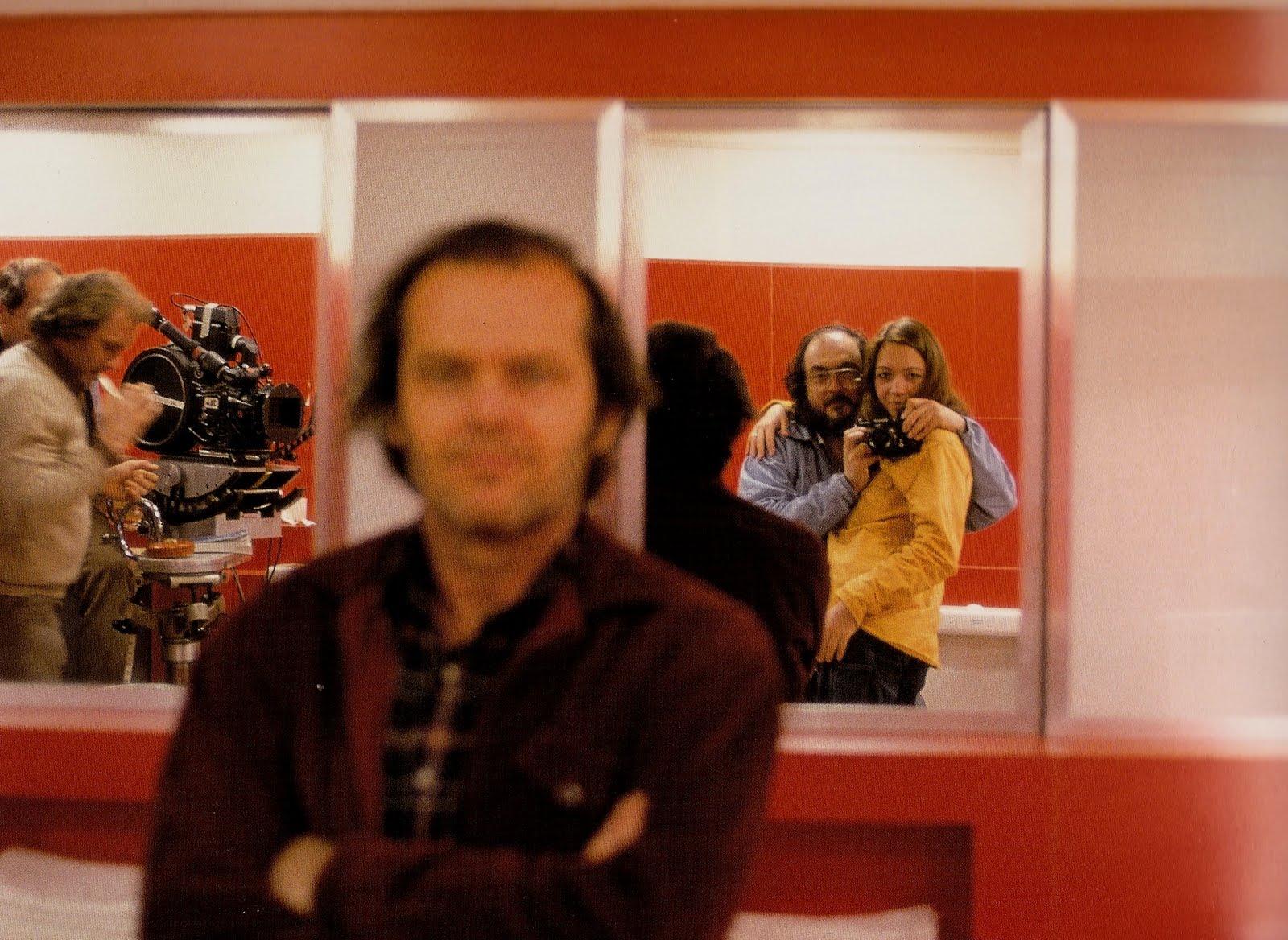
One affectation which I find particularly touching, however, is his occasional habit of taking self-portraits in mirrors.
The most famous of which is probably the moody photo below, betraying those intense serial-killer eyes he had as a young man (and no, I'm not suggesting he was a serial killer ... I'm suggesting that there is something complex and scary going on in his mind).
My favourite of these self-portraits is from much later in his career ... I had this as my computer desktop for a while. It is a warm and amusing photo of a family man having fun on the cold and imposing set of one of the coldest, scariest films ever made.
Click to enlarge and have it on your desktop.
I mention all this purely by way of introducing this lovely little animation which begins and ends with a version of the serial killer photo above.
It encapsulates Kubrick's career in a delightfully creative and attractive way. Enjoy.
Subsequent to finding that piece of Kubrick-inspired art, I have found a web page pursting with graphic designers giving their own spins on designing posters and images from his films.
Kubrick the bubble-head ... actually it's just called 'Stanley kubrick' and it's by an artist called Dan Park.
There are some fairly obvious ideas, but a lot of great, inspired and occasionally disturbing images. It's a French site called Kubrick et le Web and you can enjoy it here.
Yes, a THOUSAND films, do you hear me! I shall make them watch one THOUSAND films and they shall love me for it ... Bwa-ha-ha-ha-haaaaaagh ...
A new project for The Cellulord, which is going to take me a few weeks to complete! So, I thought, if I'm going to embrace the interweb's fashion for lists, I may as well go for the ultimate list. Thanks to Tim for giving me the idea and providing me with the initial list - I pinched it from his website here - then I tailored, tooled and tampered with it to produce the thousand-strong dream team you have here.
I brought it up to date, upped the number of British films represented here, and the number of animations and I added a lot of genre films because, well, they're fun. What's the point of being forced to watch films that aren't fun? That's a rhetorical question; you don't really need to tell me.
Asking you to read through a thousand films is a big ask, even for you, constant reader, so I'm chopping it up into sections for ease of mental digestion. This part, as its title might indicate, deals in one sweeping gesture with the first 35-or-so years of cinema before sound films became 'the norm'.
I'll annotate some films ... Others, I'll just list. This part will be more interactive than the ones that follow it because many of the films are freely available, in their entirety, to watch on the web. So, to help you start ticking them off, they're here to enjoy and be amazed by.
It's probably also worth mentioning at this early stage that this is not THE list of films you must watch before you die, but merely A list of films you must watch before you die.
Right, without further ado ... Let's get stuck in. I think this'll be the beginning of a beautiful friendship ...
01: Trip to the Moon (1902)
Yes, as we must begrudgingly admit, the French got there first. In pretty much every technical and academic development worth a damn in film history, the French got there first. The Lumière brothers invented the film camera (and, yes, there is much contention about this, particularly from the Edisons, but for the sake of my argument, we'll go with the French) and Georges Méliès was the first film-maker to experiment with the camera tricks which would evolve into the special effects the industry can now not function without.
His most celebrated film is this, which you can watch in its entirety below, filled with images you will recognise as they have been honoured, borrowed and parodied untold times.
02: Great Train Robbery (1903)
Edwin S. Porter's response was to create a very American film which is generally recognised as being the first to have what we would now recognise as a narrative, with one event logically following on from the next. It was also, reputedly, the first film shot on location and it was the first film to guide the audience's attention by editing to a close-up.
Again, this close-up has been much emulated throughout the history of cinema - and the idea of pointing a gun directly at the viewer in order to involve them more deeply in the film, has directly influenced everyone from William Castle to Alfred Hitchcock and Martin Scorsese as well as being the sole motivating force behind the present blight of 3D. Oh, you have much for which you must answer, Mr. Porter!
Here is the film entire:
03: Frankenstein (1910)
Produced by Edison, this was the first adaptation of this book. Like the Verne-inspired Trip to the Moon, this demonstrates from the beginning that cinema has an affinity for adapting literature of the fantastic!
The first Frankenstein's Monster ... He's creepy and he's cooky, he's altogether ookey ...
The film in now in the public domain (at least in America) so you can download a copy to keep from here, or simply watch it below.
04: Birth of a Nation (1915)
D. W. Griffith was the George Lucas of his time. And James Cameron. Both. He was the first star director, the first director to demonstrate unrestrained ambition in his film-making and created much of the film grammar we now take as granted. Just because things hadn't been done before was no barrier to Griffiths; quite the opposite.
Birth of a Nation was one of the first 'feature length' films and it was so successful it had a direct influence over the future of the still-fledgling movie industry in America. It also stirred up a storm of controversy because it is, essentially, a love-song to the Ku Klux Clan.
Still a deeply troubling film, this is a tour de force of audience manipulation and, the first time I saw it (a 16 mm print projected onto a classroom wall in absolute silence in the early 1980s) I actually found myself rooting for the clansmen by the end. Which is a testament to just how powerful good film-making can be!
You can see the whole film here:
It's worth noting that the title of this film has latterly been reclaimed, in an attempt to redress the balance and present a more enlightened view of American history.
Such was the controversy generated by Griffiths' film that he felt that he needed to respond immediately - so his next film, produced in just a year, depicts the entire history of human racism and ... intolerance.
05: Intolerance (1916)
This film interweaves four thematically-related plots in a way that seems extraordinarily sophisticated and just shows how few strides film-makers have really made since those early days!
Here, again, is the whole movie:
It is worth it for the Babylon sequence featuring the most extraordinary set ever built for a movie:
Click to enlarge and have a good look. This wasn't done with miniatures, it isn't CGI, it was built for real, full-size and populated with real, full size people!
06: Cabinet of Dr. Caligari (1919)
An extraordinary visual treat, the influence of which still echoes through art-house and avant-garde cinema to this day! Watch it in its entirety here:
07: Nanook of the North (1922)
A pioneering documentary - even if director Flaherty's working practices are not what we would now consider documentarian. Here it is, complete:
08: Nosferatu (1922)
The original vampire movie. Available now in a plethora of formats, including streaming over the interwebs ...
Ole Max Schrek, eh; sexier than Robert Pattinson, I'm sure you'll agree!
09: Hunchback of Notre Dame (1923)
Lon Chaney famously applied all his own make-up which, in those days, comprised putty and wire and adhesives that you nowadays wouldn't put near your face for any money. It is difficult to imagine the suffering he put himself through but, ninety years later, you mention him to a movie make-up artist today and see the admiration in their eyes.
Once again, you can watch the whole movie in all its spectacle and grandeur ... On a tiny little YouTube screen:
10: Safety Last (1923)
This is the one where a man in a straw boater with only one good hand, is filmed climbing up the outside of a building and, as in the photo below, it isn't a stuntman, it isn't a special effect, it's really him. So successful was this film, Harold Lloyd found himself climbing many more buildings in his career.
One of the most striking images in all silent cinema. Striking! Geddit? Oh, suit yourself.
And here's the whole movie featuring Carl Davis' exquisite music:
And here's a useful little featurette, explaining how that most famous of images was achieved ...
11: Ten Commandments (1923)
Cecil B. DeMille, the spiritual successor to Griffith, has his first stab at this tale.
12: Thief of Bagdad (1924)
This film features the most ambitious special effects for the time. This film is just all-round great fun, featuring the world's first action hero movie star!
13: Strike (1924)
14: Greed (1924)
15: Phantom of the Opera (1925)
You can watch the entire movie online, should you wish. It has some of the most extraordinary set and costume design of the period - Not to mention that make-up!
16: Freshman (1925)
17: Ben-Hur (1925)
Frankly, not as impressive as the re-make, but look how far movies had come in just the ten years between Birth of a Nation and this. Remarkable! It's possibly also worth mentioning that, such was the popularity of Lew Wallace's source novel that, even in 1925, this wasn't the first screen adaptation, that came in 1907!
It was not unusual to give silent movies an airing after sound arrived - by adding a soundtrack. The reality is, of course, films were almost never silent, they always had music. I had the pleasure of seeing this in London with a full orchestra conducted by Carl Davis. If you ever get the chance to do something similar, take it!
18: Lost World (1925)
19: Battleship Potemkin (1925)
Odessa Steps, okay. Simple as that.
20: Gold Rush (1925)
There was a time when Charlie Chaplin was the most famous man in the world - seventy years before internet made such things common-place.
21: Big Parade (1925)
22: Metropolis (1927)
Goes without saying, if you only watch ONE of these silent films that you must see ... It damn well better be this one!
I won't dilute it by letting you watch a ropey quality download of it, go buy the Blu-Ray and prepare to have your world rocked. Here's a taster ...
23; Sunrise (1927)
24: General (1927)
Again, a master-class in how to do physical comedy, filled with big, dangerous stunts, many of which could only be done once!
If you didn't already think Johnny Depp would be perfect to play Keaton in a movie, take a good long look into those eyes ... The resemblance is uncanny!
25: October (1927)
26: Jazz Singer (1927)
You ain't heard nothin' yet. No this wasn't the first talkie, and no it didn't signal the end of silents, by itself. But the end was very definitely in sight ... and sound.
27: Napoleon (1927)
The artistic ambition and inventiveness of the silent pioneers is something that is almost completely forgotten nowadays, but there was no film of the late silent period with greater ambition than Abel Gance's Napoleon.
Running five and a half hours, the film's final scenes were designed to be shown as a triptych - on three screens, side by side. Imagine how that would go down today in your local multiplex!
Napoleon also played a key role in the re-discovery of silent greats in the 1980s, as it got its hooks into Kevin Brownlow, who has dedicated 40 or more years to preserving these films. His passion and expertise and knowledge is inspiring. I give a damn about silent films because of him. Listen to him discussing Gance and Napoleon and see if you feel as inspired ...
28: Crowd (1928)
29: Docks of New York (1928)
30: Speedy (1928)
31: Un Chien Andalou (1928)
Ah, the old dead donkey in the grand piano again. This film still has the power to shock and confuse!
Still cutting edge after all these years, this film is full of images which, once you let them in your head, never leave.
32: Steamboat Bill, Jr. (1928)
This was the pinnacle of slapstick - when the actor as stuntman achieved a level of sophistication and physical perfection unequalled since. The storm sequence is one of the greatest pieces of physical comedy ever created. You can watch the whole film here:
Or just that incredible storm sequence, below. Again. it is worth remembering that there are no visual effects here, this was all done full size, for real! If the movie's star had been six inches out of place he would have died!
33: Blackmail (1929)
Yes, this was the first British talkie, not that it was intended to be such when they started shooting, but talkies came along so suddenly, they had to re-think and re-shoot. Still, it made Hitchcock's career for him!
34: Man with the Movie Camera (1929)
35: Pandora's Box (1929)
The tragedy of Lulu, as portrayed by Louise Brooks, whose astoundingly contemporary sexuality still has the power to ensnare ...
36: Frau im Mond (1929)
37: Blue Angel (1930)
Another film, like Pandora's Box, dealing with the dangers of Germany's predatory, sexual 1920s decadence, as later re-evoked in Cabaret.
38: L'Age D'Or (1930)
It's a film about a big door. Okay, no it isn't, it is the second of Luis Bunuel's surrealist masterpieces ... Funny how surrealism thrived in the days before dialogue, when so much of the movie occurred in the viewer's imagination!
Whew. So, we made it ... And we're only 38 films in. Trust me, as we get into less esoteric territory, I'll pick up the pace and be less and less helpful. You'll have to start finding the films yourself!
Part two of this humongous list - The Thirties - is here ...